
How Greenwich Resident Searches Begin
No master list of Greenwich residents exists. A useful search starts by naming the role you need. Owner, registered voter, deed party, license holder, fiduciary, business filer, historical householder, or party to a public case. Those roles sit in different systems. A deed names a grantor or grantee. It says nothing about who sleeps in the house. An assessor file ties an owner to a parcel, but only as an assessment snapshot. A city directory can place a householder on a past street. But it proves no current address. Pick the narrowest trail first. An address points toward the Town Clerk, Assessor, GIS, permits, and abutter records. A name opens land records, court indexes, voter routes, licenses, and business filings. An old date leads to Greenwich Library, maps, newspapers, probate, and the Historical Society. The strongest match pairs two independent sources that agree on name, place, and time.
- Write down the name, address, village label, or year already known.
- Check the land index or assessor route for the right role, not a blanket claim of residence.
- Use a court, vital, voter, license, or business source when that record type fits the question.
- Move to the Library or Historical Society for an older household, street, or neighborhood clue.
- Ask the custodian through the Connecticut Freedom of Information Act when the record is not online and is legally open.
Greenwich Offices Behind Resident Records
Fairfield County is a geographic and judicial label, not a records government. Connecticut has no county government. So there is no Fairfield County recorder, clerk, assessor, or resident-search counter for Greenwich. The Town Clerk holds the land records. The Assessor keeps the Grand List and the field-card routes. GIS supplies maps, data products, and abutter requests. State offices fill the gaps for courts, vital events, voters, licenses, and business entities.
Greenwich Town Clerk
101 Field Point Road, first floor
Greenwich, CT 06830
203-622-7897
Greenwich Assessor
Town Hall counter and public terminals
Field cards, Grand List, street reports
203-622-7885
Connecticut voter route
Town registrars and state CVR
Individual lookup and restricted data file
State system
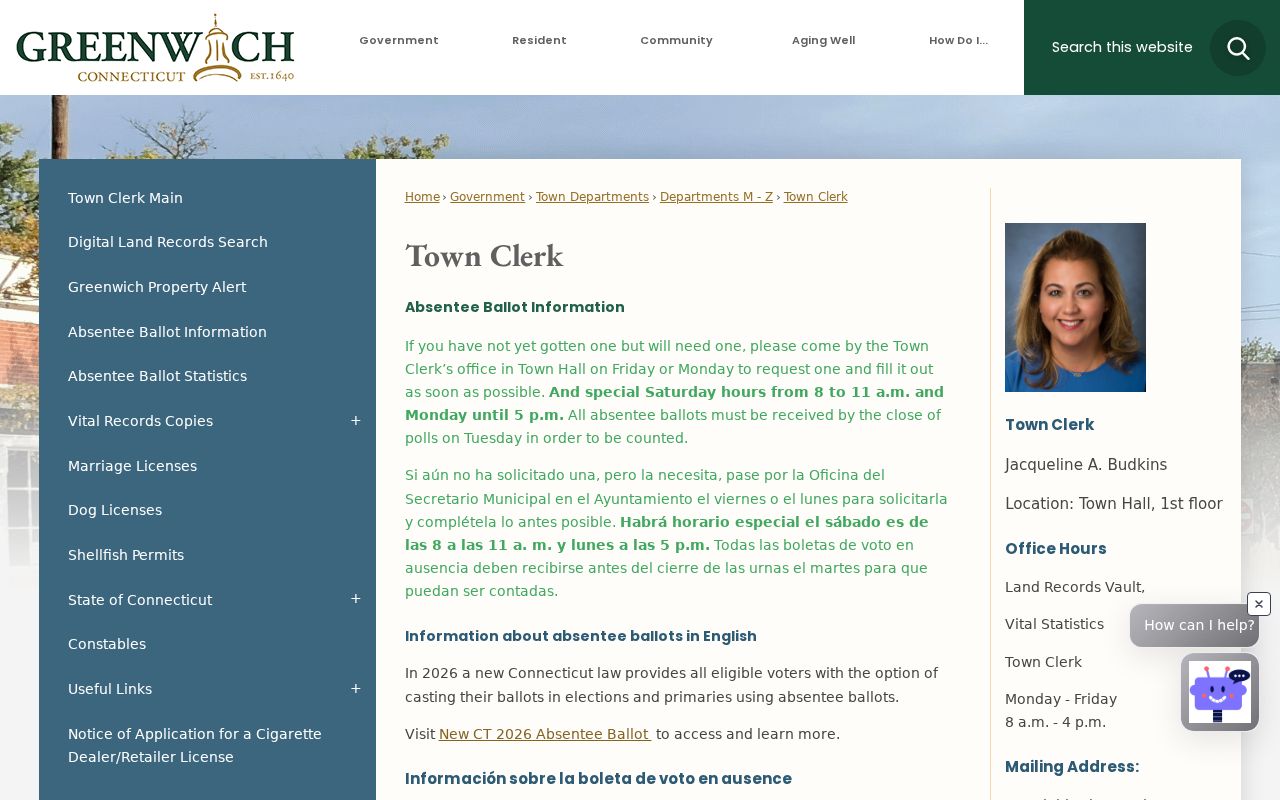
The Town Clerk image anchors the records map in a named local custodian. That matters here. The address and hours belong to a real counter, not a generic county office. The Assessor publishes no public web parcel search. Its phone, email, mail, and in-person routes carry the load instead, which changes the search plan but not the records themselves.
Greenwich Land Records Link Names and Property
The Greenwich land-record portal is the clearest online channel from name to property. Its quick search runs through the Property Records department. One free-text box accepts a grantor or grantee, subdivision, document type, or document number. Recorded-date presets run from the last day to the last year. Choose index-only view or full-text OCR. Coverage reaches from the 1920s to the present. The FY25-26 operations plan reports indexing and scanning back to 1927. Older books still require a Town Clerk follow-up. The advanced land-record search splits out Party Names, Grantor, Grantee, recorded date, instrument date, document type, document number, book, page, remarks, property address, and phrases inside document images. Dates use month/day/year. The form sets no result limit or export control. No copy price appears on it either. Confirm those details with the custodian before any large request.
The Town's digital land-record page is the official starting point for the public search.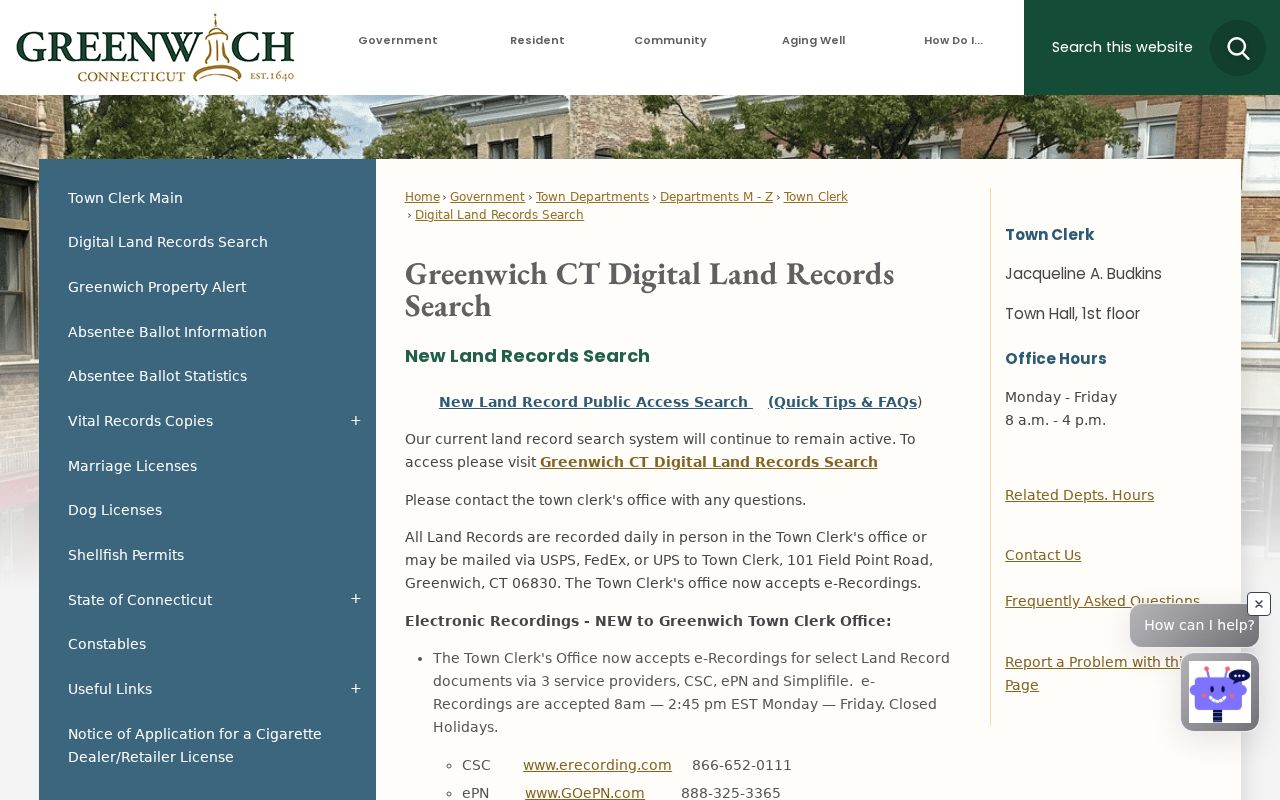
The Greenwich land-record page shows the municipal route behind the index fields, along with the caveat that older books stay offline with the Town Clerk.
| Quick term | Grantor, grantee, subdivision, document type, or document number |
|---|---|
| Date scope | Recorded-date start/end with preset ranges from 24 hours to one year |
| Search depth | Index Only or Index & Full Text using OCR |
| Advanced fields | Party, dates, document type/number, book/page, remarks, address, image phrase |
Record the instrument number or book and page. Add the recorded date, named role, and property description. A land index proves an instrument was recorded. It does not prove that the named owner occupies the property now.
Note: Greenwich Property Alert can send free email notices for a name, keyword, or selected real-property filing, but the hosted portal disclaims guaranteed notice.
What Greenwich Assessor Files Can Show
Greenwich assesses property at 70 percent of value. The Grand List is annual, dated October 1. The Assessor's public routes are practical and specific. A field-card request names the Parcel ID and costs $1 per card. A printed card can show assessment, ID number, ownership, size, type, and year built. The Real Estate page adds owner, property address, parcel ID, lot size, current assessment, and the most recent transfer volume and page. Electronic real-estate lists run $10 each. They cover owner name, property address, and assessment. A detailed real-estate CD or USB lists at $40 plus $5 shipping. Counter binders, sales material, and public terminals still carry weight. The office offers no public online parcel interface. Five phone inquiries can go in at once. Treat an Assessor result as an owner or tax record, then compare its date and transfer reference against the Town Clerk index.
The official Greenwich Assessor page shows the counter, field-card, and file-request routes.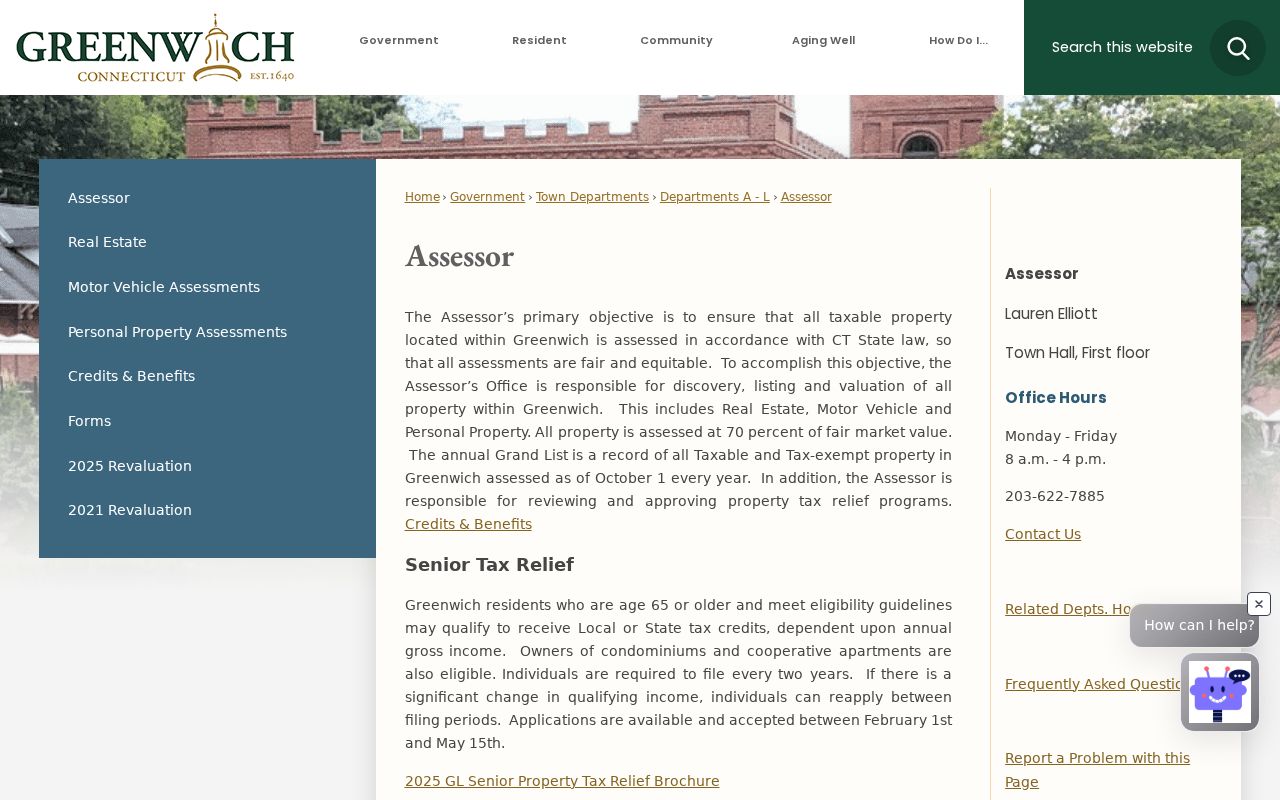
The screenshot maps the Assessor route standing in for a guessed web search. Name the parcel and record type before you ask.
Current Greenwich Resident Directory Sources
Each source answers a different question about Greenwich. The Town Clerk indexes recorded instruments, while the Assessor publishes ownership and assessment data through office channels. The voter route is different. It offers individuals a lookup plus a restricted state data-file process, and GIS links parcels to nearby properties while business and license systems identify entities and credentials rather than a person's home.
| Source | Role Named | Keeper | Access Pattern |
|---|---|---|---|
| Land-record index | Grantor, grantee, filer | Greenwich Town Clerk | Online search, vault, counter |
| Grand List / field card | Owner and parcel | Greenwich Assessor | Counter, phone, mail, paid files |
| Voter lookup | Eligible registered voter | Town registrars / Secretary of the State | Individual route; voter file has restrictions |
| GIS and abutters | Parcel relationship | Greenwich GIS | Maps and request forms |
| License or entity search | Licensee, agent, principal | Connecticut DCP / Secretary of the State | Online fields and rosters |
That separation keeps a Greenwich residents directory honest. An owner is not automatically an occupant. A registered voter plays a different role than a deed party, and a business principal or licensee may simply list an address tied to a filing. Names drift across these records. For one person's records, use the focused Greenwich resident lookup workflow and preserve the source date.
Greenwich ZIP Codes Shape Resident Records
The current Town survey and supporting school and polling material identify five residential delivery ZIP codes: 06807, 06830, 06831, 06870, and 06878. Their community labels are useful search clues, but ZIP geography is not the same as a neighborhood, voting district, or town boundary. Cos Cob is tied to 06807; central Greenwich and Byram share 06830 context; Glenville and the northwest use 06831; Old Greenwich uses 06870; and Riverside and North Mianus are associated with 06878.
Greenwich also has a 06836 mailing and PO Box wrinkle. Town Hall uses a street address with 06830 while a mailing address can use 06836. USPS routing material explains why that code should not be treated as a sixth residential neighborhood. Verify the delivery code with the USPS city and state lookup, then match the result to a parcel or street record. The ZIP table is a filter, not proof of a household.
Greenwich GIS maps provide the official parcel and ZIP-geography context.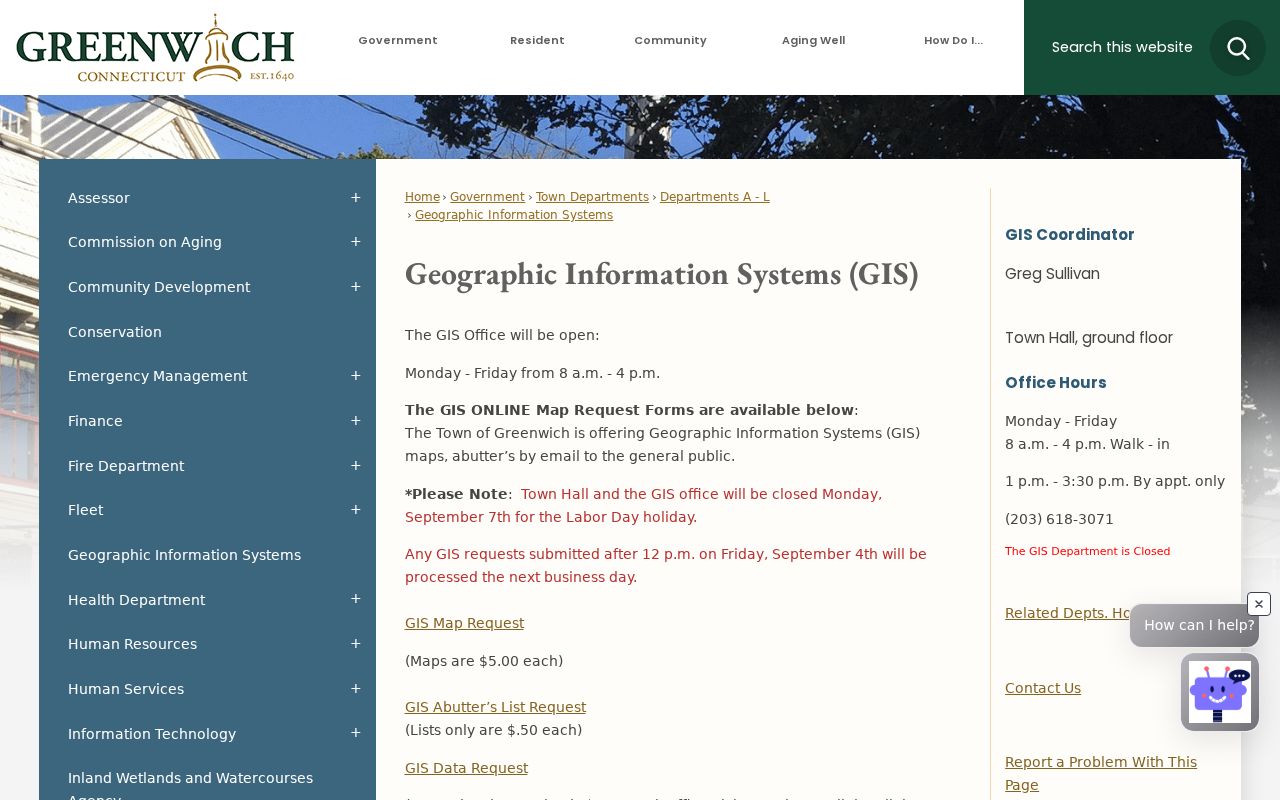
The GIS view places ZIP clues beside parcel geography across Greenwich. It is not a current-resident list.
Greenwich Resident Voter Rolls Need Care
Connecticut administers voter records town by town. The state level centralizes them, so an individual turns to the Secretary of the State's MyVote lookup while larger voter-file requests go to the LEAD unit. The file arrives as a CSV priced at $300. Eligible uses are limited to election, scholarly, journalistic, political, or governmental purposes. It is not a general people list. Public Act 26-1 §96 exempts month and day of birth from release. Only the year comes out.
The official MyVote link is the safe route. Rather than guess at its fields, treat the state voter-roll explanation as the authoritative scope, then ask the local registrars about a town record or polling question. A voter record supports a registration or participation fact at a stated time. It proves nothing more. Never stretch it into a claim about every person at a Greenwich address.
The Connecticut voter-roll page explains the public scope and the absence of county government.
Treat the voter-roll screenshot as a companion to the access rule itself. It illustrates the format. It cannot substitute for the official lookup or for contacting the registrar.
The official MyVote link is the correct individual lookup route even though its live fields were not captured.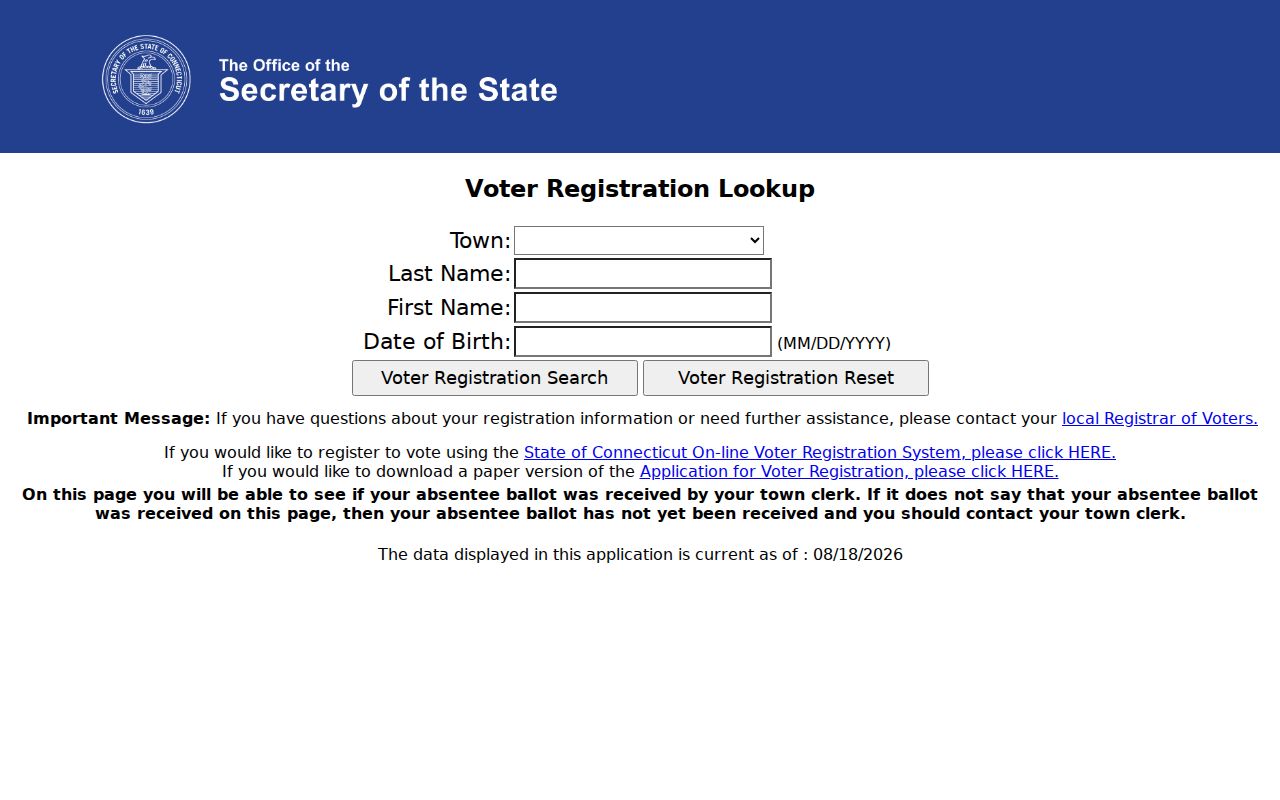
The image splits public lookup from restricted voter-file requests.
New Greenwich Tools for Record Activity
Greenwich keeps adding public-facing tools. None forms a master resident directory. The Town Clerk's Property Alert watches a name, keyword, or document criterion and emails notices about real-property filings such as liens, releases, or possible fraudulent attempts. The alert is free. The hosted portal still warns that notice and accuracy are not guaranteed, so open the actual instrument through the land index before relying on any alert.
The Crime Data Portal launched April 7, 2026. It refreshes around 7:00 a.m. with the prior day's data, all of it preliminary. Exact incident addresses may be generalized or withheld for active investigations and victim privacy. The dashboard is no resident lookup. That is the pattern. Modern Greenwich records move toward faster public access while keeping a clear source date and a clear boundary.
The Greenwich Crime Statistics page describes the daily portal and its privacy caveats.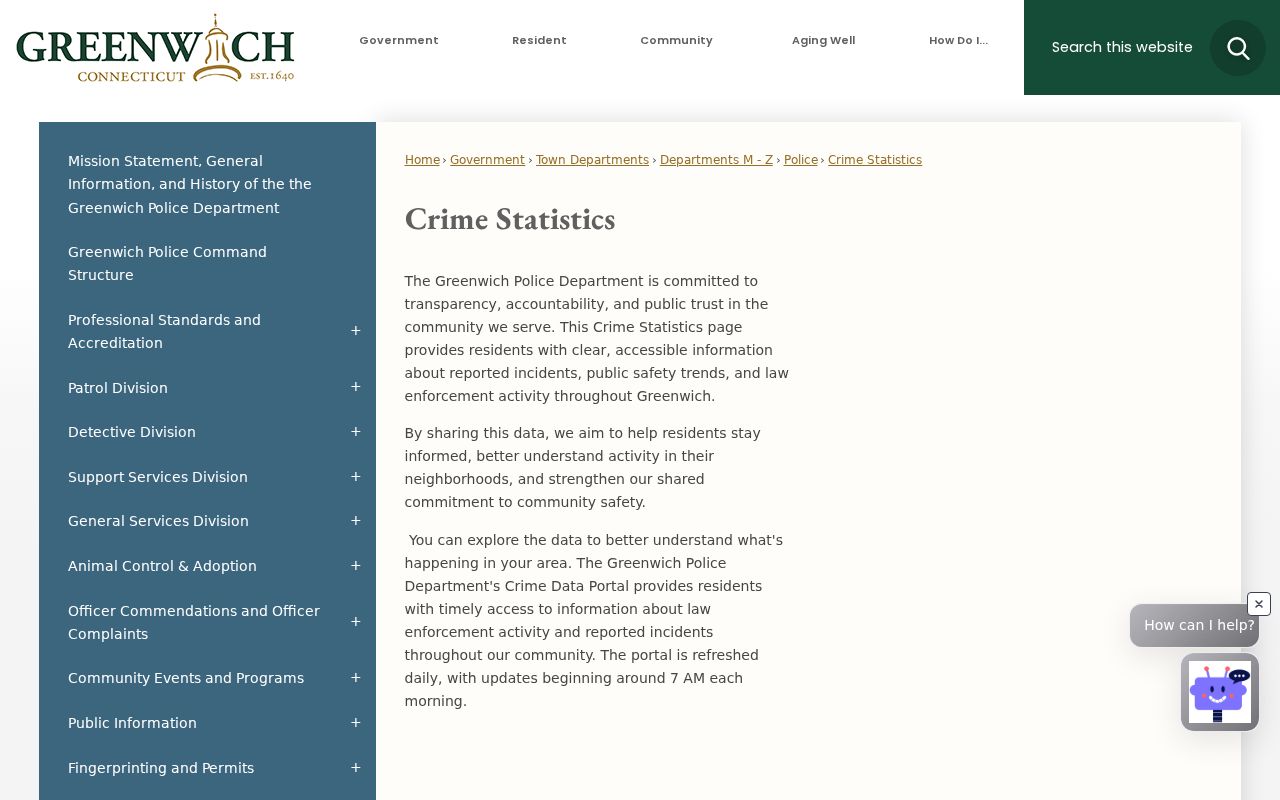
A public dashboard can add civic context to record activity. It shows patterns at a broad scale. No individual person or exact address gets identified.
Greenwich Resident Records by Address
An address search works best as a chain. Start with the label as written. Keep the village or ZIP clues attached, since a Greenwich address can sit inside overlapping town, neighborhood, postal, judicial, and GIS geographies. Preserve every alternate spelling that appears. A parcel number, deed book and page, transfer reference, or application number bridges records far better than a street name alone.
- Search the Town Clerk land index by property address, grantor, grantee, or document phrase.
- Ask the Assessor for a field card, street report, or parcel detail using the Parcel ID when available.
- Use GIS maps or an abutter request to understand the parcel's neighbors and physical setting.
- Check IWWA applications, building, zoning, or permit records when the question concerns an environmental or construction history.
- Use a directory, map, newspaper, probate, or court record to confirm the name and date before publishing a conclusion.
The chain also supplies a fallback. When a record is not online, write a narrow Greenwich Freedom of Information request naming the department, record type, date range, address or parcel, and preferred format. FOI access still has limits. It does not override vital-record, court, victim, voter-privacy, or other statutory protections.
Historical Greenwich Resident Directories
At Greenwich Library, the city directory holdings reach back to the late 1800s. Digitized Greenwich directories are described for 1890-1922. The Library's named ContentDM collection spans Turner volumes from 1885-86 through 1912-13, plus Richmond volumes for 1920, 1922, and 1924. Polk volumes cover 1930-31 and 1934-35. Rich detail fills these books. The 1885-86 item covers villages, a business index, a street-by-street address guide, and a phone cross-reference. Household and business profiles appear too. Cos Cob, Mianus, Glenville, Riverside, Sound Beach, East Port Chester, and Byram all enter the regional picture in the 1930-31 volume.
A directory year is a dated listing of a past household, not a current-resident result. Pair it with a deed chart, census, map, obituary, probate record, or newspaper index. Local-history help is available, and the Library offers 30-minute appointments. The Historical Society rounds things out with manuscripts, maps, photographs, organization records, and finding aids. Compare the years on the Greenwich city directories page. The full collection treatment lives there.
Greenwich Library's local-history page shows the directory, map, yearbook, and research-help shelf.Fairfield County Is Not a Greenwich Office
Fairfield County is a real label with limits. It can describe a region, a court district, or a historical setting in Connecticut. It cannot locate a Greenwich deed. Land records stay where the land lies. Property assessment is municipal, probate sits in District 54, and trial-court routing runs through the Stamford-Norwalk Judicial District. Voter administration starts with town registrars and state systems.
This Greenwich quirk matters. A request sent to a supposed county recorder drifts away from the actual public custodian. Use the Town Clerk, Assessor, GIS, the Stamford courthouse, Greenwich Probate Court, the Library, the Historical Society, or the named state office, because Connecticut's distributed government keeps the records map distributed too.
Search the custodian, not the county label. Fairfield County geography narrows the region, but the official route depends on the record type and the date.
What Greenwich Records Cannot Say
A public record can name a role, not a resident. Deeds name parties to an instrument. Assessor files name owners and tax attributes. GIS describes land relationships. Voter routes concern eligible registration, and a court result may omit protected parties and selected documents. Vital records carry age, relationship, ID, adoption, parentage, and Social Security rules. DMV identity data stays restricted. Police and victim details can be withheld. When sources conflict, keep both dates and ask the custodian to correct or clarify. Never publish a protected address, full birth date, Social Security number, or victim detail; Connecticut's Address Confidentiality Program, voter privacy program, and FOI §1-217 protections exist for people who need their location shielded.
| Route | Strength | Limit |
|---|---|---|
| Official index or office file | Named custodian and record date | Role-specific, incomplete, or restricted |
| Library or archive collection | Older names, streets, maps, and context | Historical, not proof of present residence |
| Commercial people-finder category | May combine many public and purchased data points | Source dates and accuracy can be hard to verify |
Greenwich Place Names Need Dates
Old and new names can mark the same Greenwich ground. The Town's 2026 Founders Day notice ties Monakewego, Elizabeth's Neck, Tod's Point, and Greenwich Point to the 1640 purchase and the Town's 1944 purchase of the Point. Historical Society material traces Stanwich, Indian Field, Chickahominy, Cos Cob, and other pocket communities. Local associations still use Byram, Riverside, and North Mianus.
Dates matter here. A deed, map, oral history, residents directory, postal label, and modern street record may each name one place differently. Keep the source and date with the label. A place name is a search aid, not proof a person lived there. The 1869 Town map, 1893 atlas, and 1931 atlas bridge old labels. Later street maps continue the chain. Only then is a deed proof of residence.
Greenwich's resource-map page brings together street, zoning, coastal, sewer, and open-space map routes.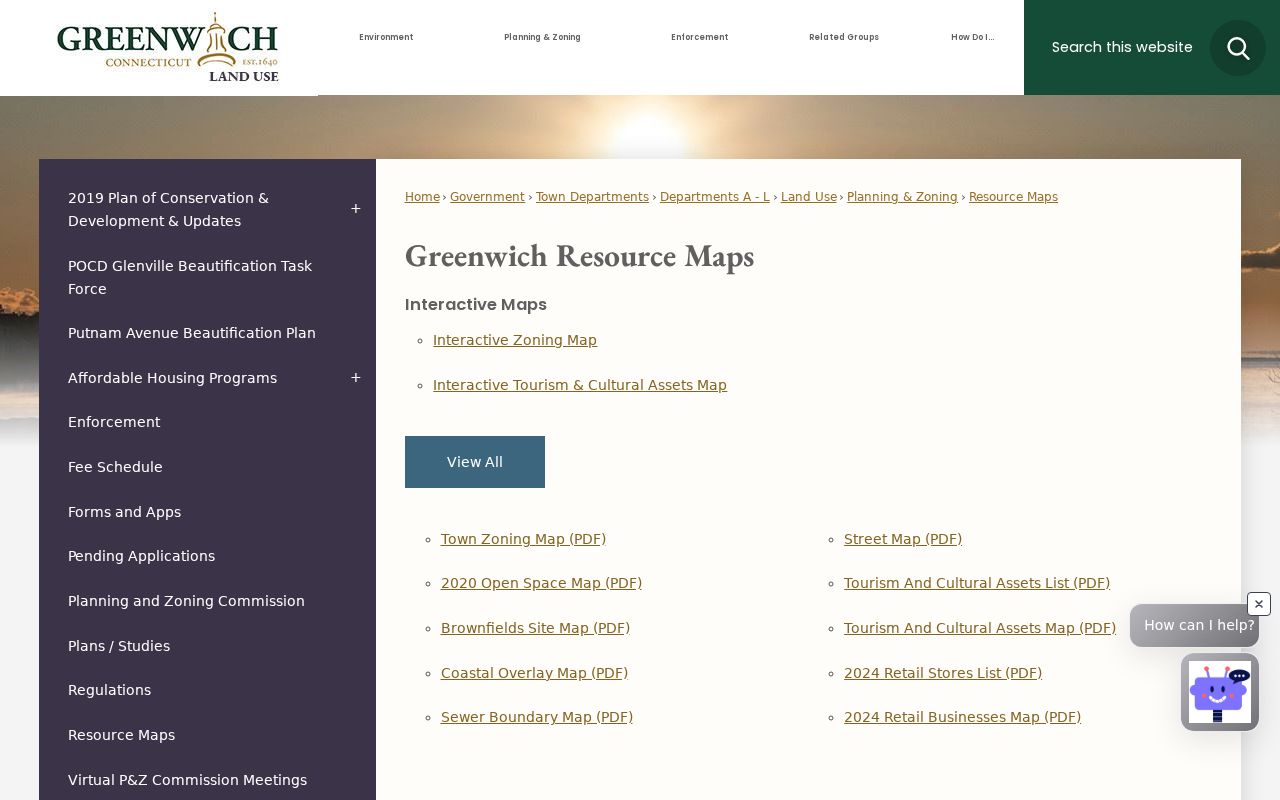
The resource map layers Greenwich geography. A map helps frame a search, while the named custodian confirms the record.