
Greenwich City Directory Collections
Greenwich Library's Local History & Genealogy collection brings together city directories, yearbooks, maps, oral histories, vertical files, pamphlets, periodicals, and U.S. Census microfilm. It describes directories from the late 1800s and a digitized run from 1890 through 1922. The online shelf is not the whole record. Later scans, paper volumes, microfilm, and archive finding aids remain important. The table separates the named series found in the collection from the broader local-history holdings, so a gap between two years is not mistaken for a gap in Greenwich's past.
| Collection | Years | Where Held | Access |
|---|---|---|---|
| Turner, McClean & Losee's Directory | 1885-1886 | Greenwich Library ContentDM and Historical Society microfilm | Online item; restrictions may apply |
| Turner's Directory | 1890-91, 1898-99, 1900-01, 1902-03, 1908-09, 1910-11, 1912-13 | ContentDM and Library Local History | Digitized items and research help |
| Richmond's Directory | 1920, 1922, 1924 | ContentDM and Greenwich Library | Digitized items; check each year |
| Polk's Directory | 1930-31, 1934-35 | ContentDM and Library holdings | Digitized items with street guide |
These are not evenly spaced annual records. The source inventory identifies early Turner volumes, Richmond volumes, and Polk volumes, but the inspected metadata does not establish a complete run for every year. The 1885-86 volume was published by Taylor & Co. in Tarrytown, New York, and was microfilmed for the Historical Society in June 1995 before digitization. Restrictions may apply. A missing year should be treated as an access or publication question, not filled from an assumed edition.
Greenwich City Directory Shelf Access
Greenwich Library is the practical first stop when a city directory scan does not answer a question. Its Local History & Genealogy service lists about 5,000 books, 800 oral-history transcripts, yearbooks, maps, vertical files, pamphlets, periodicals, and directories. A one-on-one appointment lasts 30 minutes. The published house-history contact is 203-622-7948 and history@greenwichlibrary.org. Library-only databases include American Ancestors and Ancestry Library, while FamilySearch offers limited remote access with more material at the Library. Ask for the item year and section before assuming a name is absent.
The Greenwich Library Local History & Genealogy collection page identifies the directory shelf, maps, yearbooks, and research-help route.
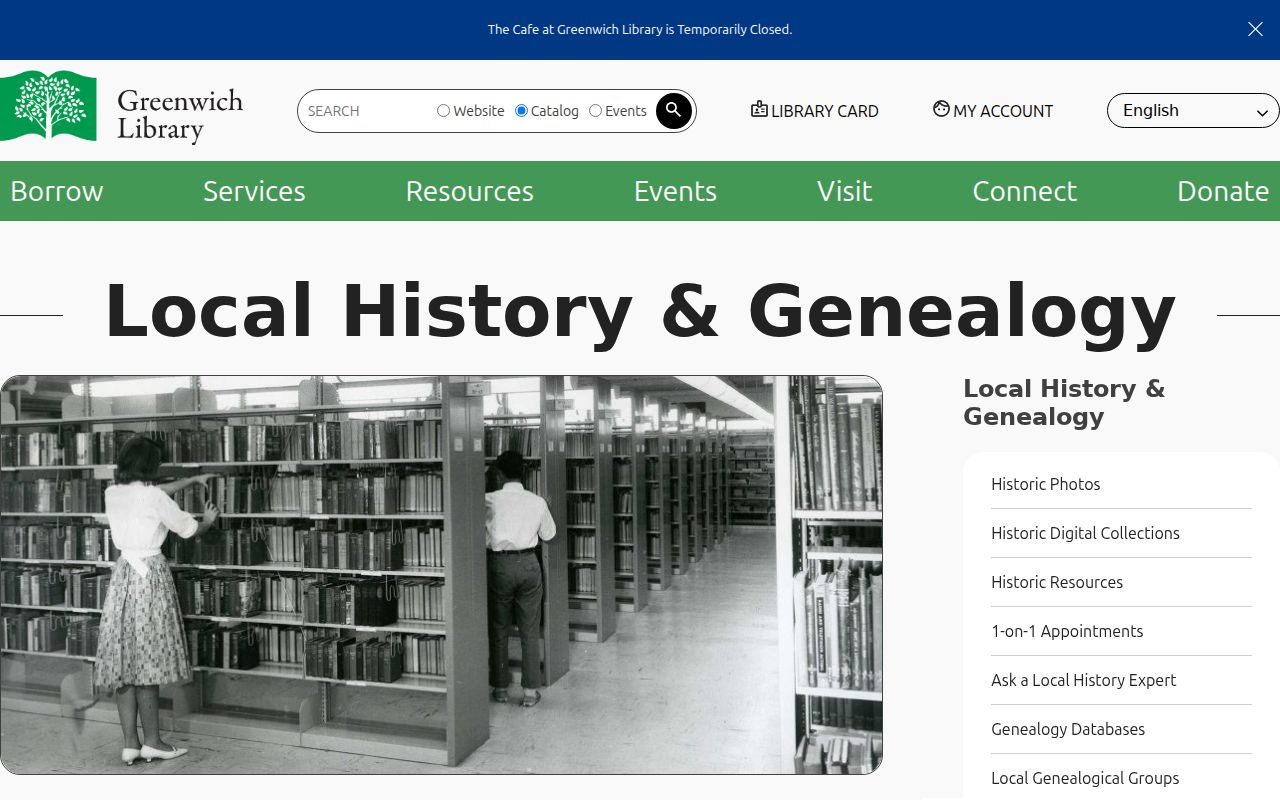
The library's mix of paper, microfilm, and local databases makes a staff question useful when an online city directory search comes up empty.
Digitized Greenwich City Directories
Greenwich Library's ContentDM directory collection gives a named sequence rather than a generic search box. Items include Turner, McClean & Losee's 1885-86 volume, Turner volumes in 1890-91 through 1912-13, Richmond's 1920, 1922, and 1924 editions, and Polk's 1930-31 and 1934-35 editions. The 1885-86 metadata covers Port Chester, Greenwich, Cos Cob, Mianus, Rocky Neck Point, and Glenville, with business material for Rye, Mamaroneck, and Harrison. Polk's 1930-31 volume adds Cos Cob, Mianus, Glenville, Riverside, Sound Beach, East Port Chester, and Byram. Those geographic notes matter when a historical city directory uses a village label instead of Greenwich.
The Greenwich Library Digital Collections landing page is also the route to the newspaper index and other local material. A useful scan trail records the title, item number, year, publisher, and any restriction notice. The sequence below shows the main changes in the named online run.
- 1885-1886: Turner, McClean & Losee's Directory introduces the early village and street-guide material.
- 1890-91 to 1912-13: Turner's Directory supplies several dated views of names, streets, and local business context.
- 1920 to 1924: Richmond's Directory bridges the early and later twentieth-century entries.
- 1930-31 and 1934-35: Polk's Directory adds a broad village list, private-citizen and householder sections, a street and avenue guide, and business material.
The Digital Collections page used for the Greenwich city directory should be read as a catalog of identified items, not proof that every page has searchable text.
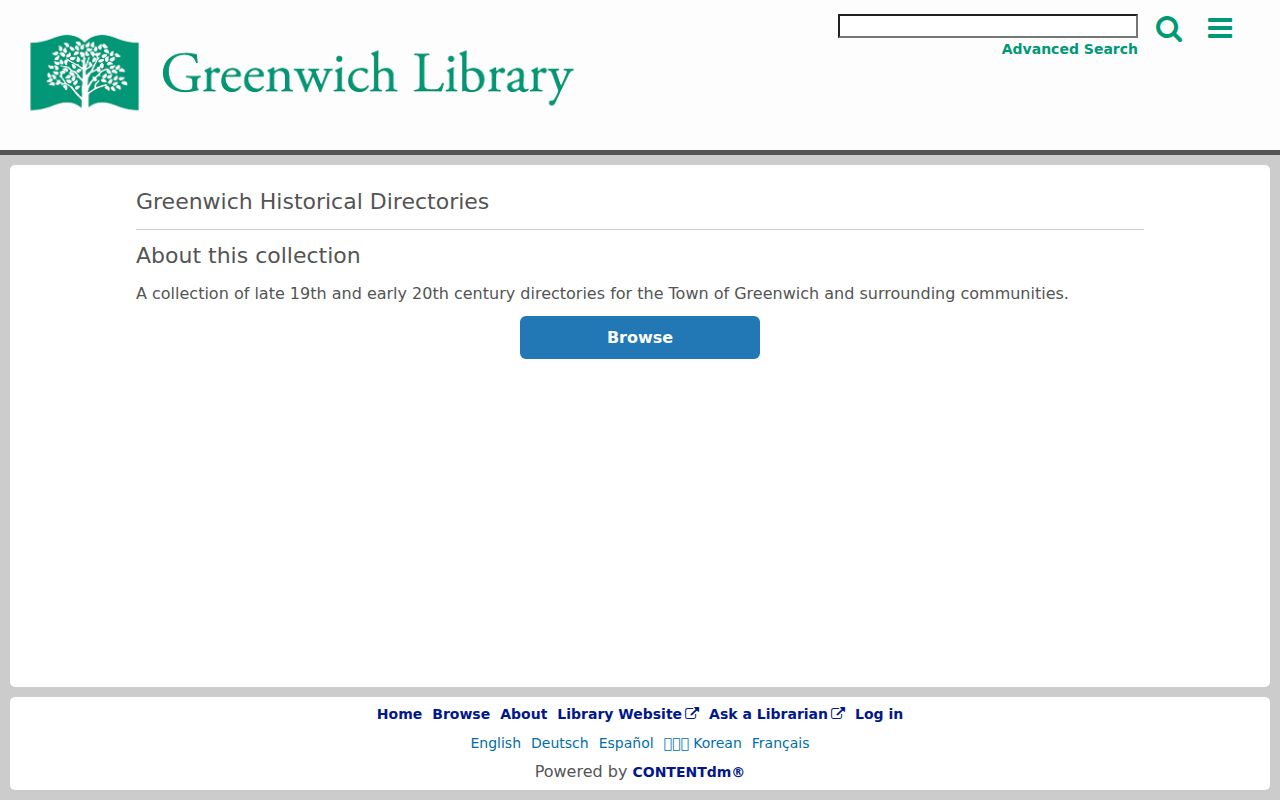
The digitized collection makes the year and title visible at a glance, while page-level reading still depends on the scan and its legibility.
The Greenwich Library Digital Collections catalog provides the wider local-history landing point used to check related volumes beyond the directory series.
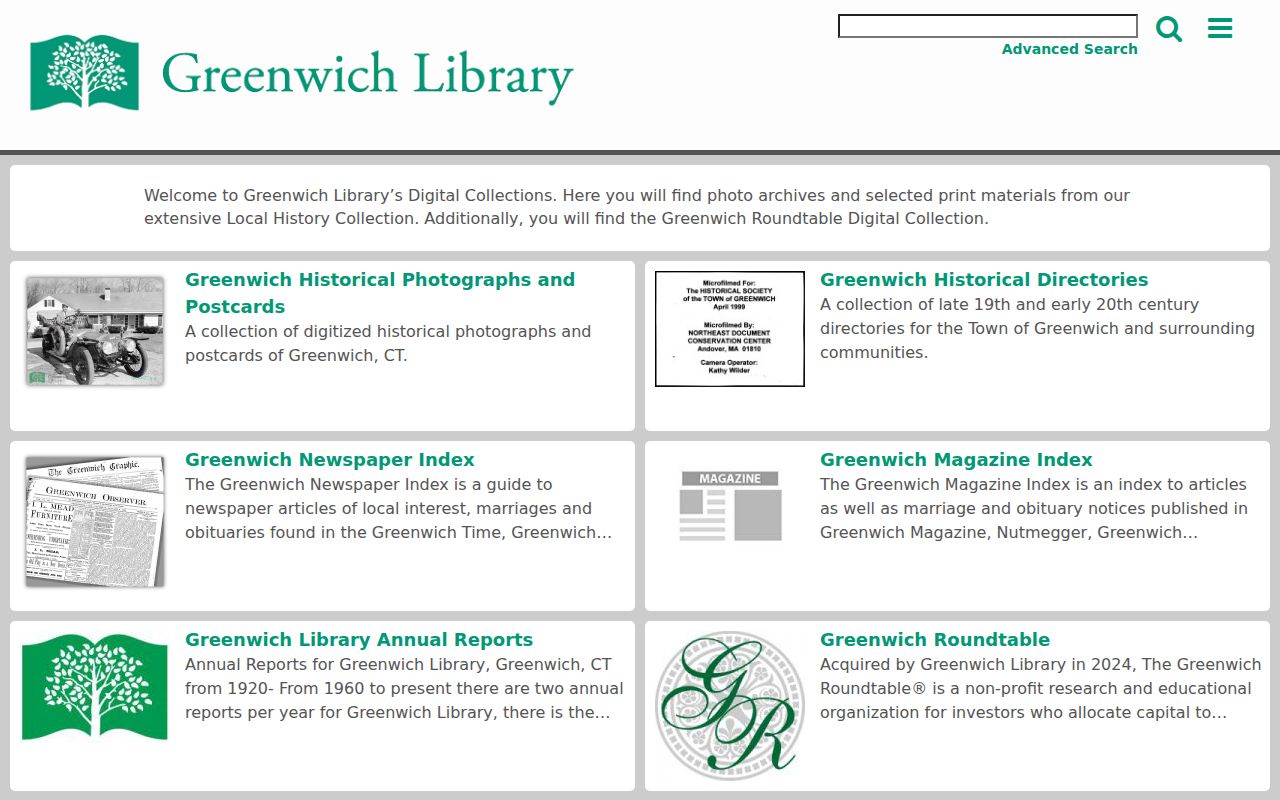
The catalog view helps separate a directory item from the Library's other Greenwich newspapers, photographs, and local-history records.
Greenwich City Directory Maps and Guides
The 1885-86 item is especially useful because its metadata describes a Comprehensive Business Index, Street by Street Address Guide, Phone Number Cross Reference, and Household and Business Profiles. That structure lets a reader move between a name and a place. A phone cross-reference may connect a number to an entry, while the street guide may expose nearby names. It remains a historical source, not a current contact list. Use the village label and the date printed in the volume, then compare the street with a period map before assuming that an old road name matches today's spelling.
The 1885-1886 Turner, McClean & Losee's Directory record supplies the catalog description for this layout. The individual scan was not exposed as searchable OCR during the research pass, so no sample person or address is quoted. That gap is useful: it keeps a catalog description separate from a page-level transcription.
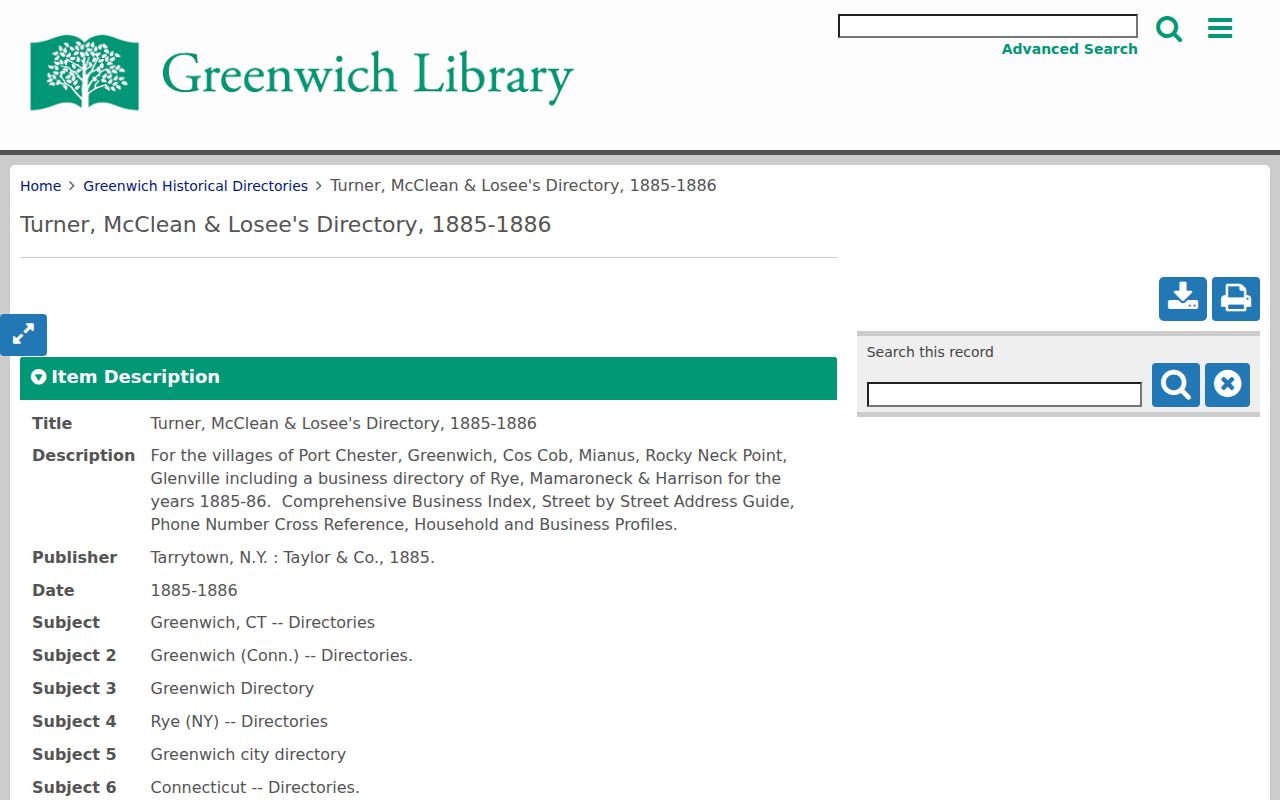
The 1885-86 directory image is a source to inspect page by page, especially when a street guide and a household profile point to different kinds of entries.
Reading a Greenwich City Directory Entry
A Greenwich city directory entry can mix a person, a business, a household role, and an address clue. The inspected collection confirms the larger sections and guides, but it does not expose a verified sample line for quotation. Use the inventory below as a recording sheet. Copy what the scan actually prints, keep the item year beside it, and leave a field blank when the volume does not show it.
| Name | Preserve the printed spelling and punctuation from the alphabetical person or business section. |
|---|---|
| Occupation | Record an occupation only when the scanned entry or profile states one; no individual value was captured in research. |
| Spouse or family note | Check the line and its abbreviation key; the inspected metadata does not verify a specific spouse notation. |
| Address | Use the street or avenue guide, village label, and printed year as separate fields. |
| Occupancy notation | Do not infer who lived there. Record a mark only after visually confirming the volume's key and the entry. |
- Criss-cross section
- A street-order or reverse-directory section that helps move from a location to names when a volume includes one.
- Householder index
- A list organized around householders or private citizens. Polk's 1930-31 metadata identifies separate private-citizen and householder material.
- Abbreviation key
- The volume's explanation of shortened words and marks. Inspect it before expanding an occupation, family note, or address symbol.
Greenwich City Directory Newspaper Clues
A directory line gains context when paired with the Greenwich Newspaper Index. The Library says the index points to local-interest articles, marriages, and obituaries in Greenwich Time, Greenwich News, Greenwich Graphic, Greenwich News and Graphic, and Greenwich Observer. Referenced articles are available in hardcopy or on microfilm. Search by date and publication, then use the article to confirm an event or relationship rather than treating the index entry as a current address.
The Greenwich Oral History Project, founded in 1974, reports more than 1,250 interviews and 142 books with memories reaching back to the 1890s. Its collection is held at Greenwich Library and its branches. Oral history can explain a street name, business, immigrant community, or neighborhood change that a city directory only labels. Attribute the speaker and interview, and keep recollection distinct from a deed, map, or directory page.
Greenwich City Directory Scan Limits
An online image can look complete while leaving important gaps. ContentDM metadata and the collection landing page were inspected, but the scanned pages were not exposed as searchable OCR during the unattended research pass. No individual name or address line was transcribed. An empty text search therefore cannot prove that a person is absent, and a catalog description cannot support a quotation from a page that has not been read.
When a scan is hard to read, ask the Library or Historical Society for the item, year, page, and any restriction note. Describe a historical entry as “listed in” its year, not as a current resident. For modern identity or address verification, use the Town Clerk, Assessor, GIS, or the Greenwich resident lookup workflow. The distinction protects both the historical record and the person named in it.
Using Greenwich City Directories for Family History
Tracing a household through Greenwich city directories works best as a dated comparison. The Library's house-history guidance starts with deeds and a deed chart, then uses census schedules, directories, and maps to test the chain. A directory can show a person or business on a street in a particular year, but it may not identify an occupant, and a disappearance can mean a move, death, nonlisting, a changed business, or a missing edition.
- Choose a target year and search the alphabetical person or business section for the most exact name spelling available.
- Write down the item title, page, village or street, household or business role, and any phone cross-reference.
- Check the street or avenue guide, then compare the address with a period map and the next available directory year.
- Pair directory dates with census years to narrow the years between federal snapshots, keeping each source date visible.
- Use an obituary, cemetery clue, probate record, or deed to test a relationship, and do not turn a historical line into a current contact claim.
The Library's house-history guide recommends a deed chart because legal owners and listed household members are different evidence. Its method also helps with old spellings: record the street as printed, then compare it with the 1869 Town map, 1893 atlas, 1931 Fairfield County atlas, or a later Planning & Zoning map. For modern street-level work, the Greenwich street directory keeps the address angle separate from the historical shelf.
Greenwich Historical Society Directory Clues
The Greenwich Historical Society Library & Archives holds more than 1,300 linear feet of personal papers, manuscripts, municipal, business, association, and religious records, photographs, histories, genealogies, maps, audio, and video related to Greenwich, Bush-Holley, and the Cos Cob art colony. Public access is on Thursdays during regular hours or by appointment. The archive is at 47 Strickland Road, Cos Cob, CT 06807, and the published phone is 203-869-6899.
The Society's catalog and finding aids can point to material that never became a searchable city directory field. A staff request should name the person, village, street, organization, and date range, then distinguish a manuscript, photograph, map, or oral recollection from a primary land or vital record.
The Historical Society archive access page describes the local collections and appointment route for deeper Greenwich city directory research.
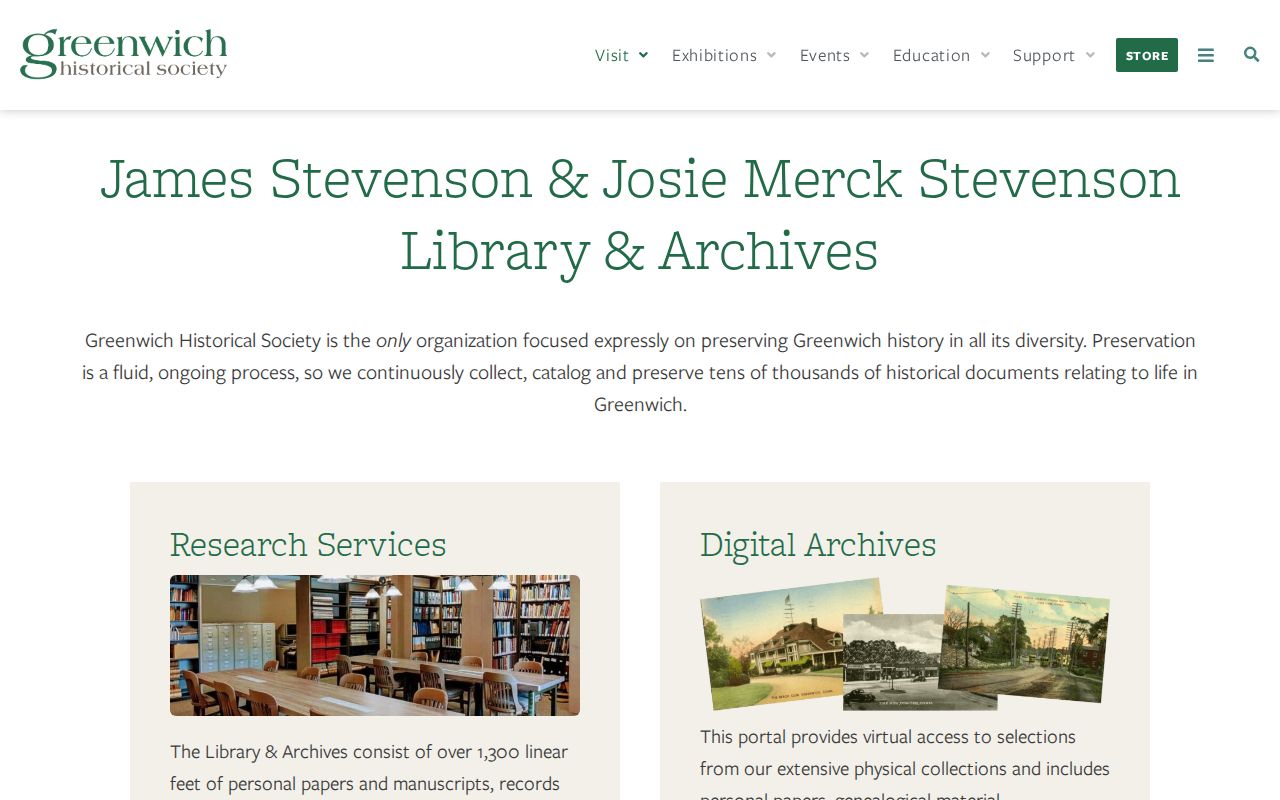
The archive layer adds context around the printed directories, especially for organizations, maps, family papers, and Cos Cob history.